
Building understanding through ASL
For Nirali Q., learning American Sign Language is personal.
As someone who is hard of hearing, the fourth grader sees herself as someone who can help connect two worlds.
“Most hearing people don’t try to communicate with deaf people,” Nirali said. “There are two different sides, but I want to be the person who bridges the gap.”
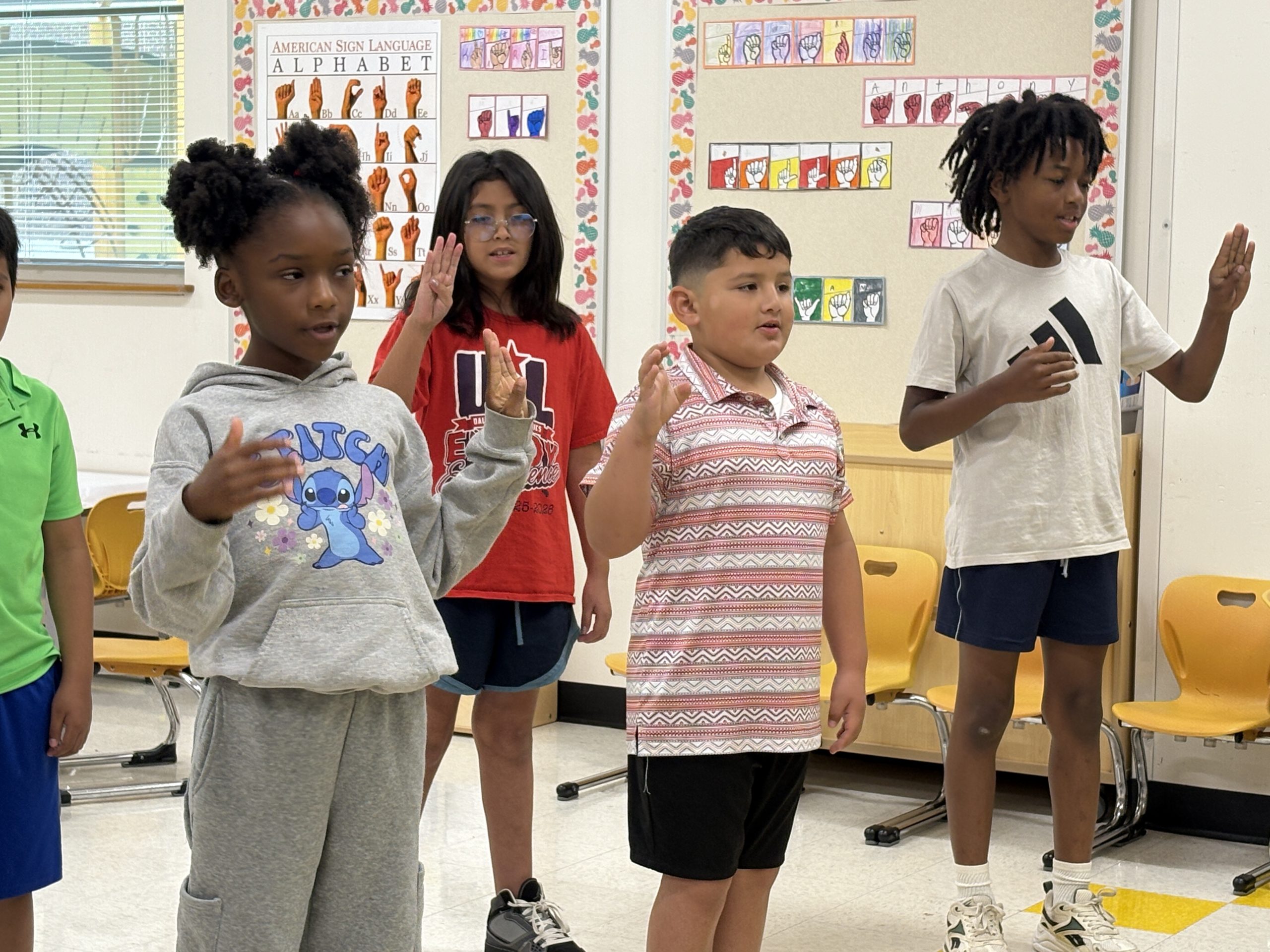
This summer, she’s building those skills through Dallas ISD’s Spark ASL and Multi-Sport Camp, which combines ASL instruction and lessons about deaf culture with activities such as volleyball, basketball, and swimming.
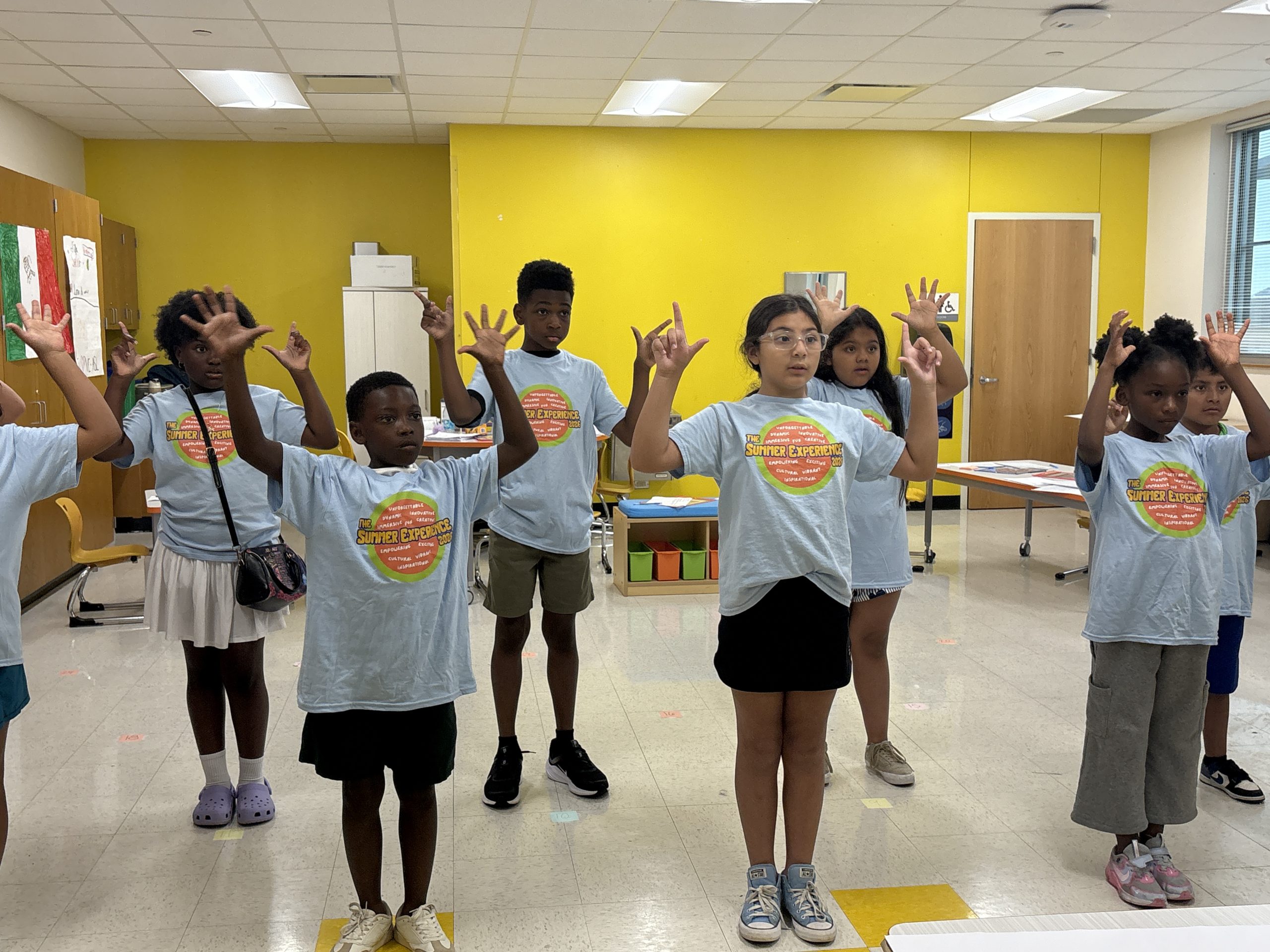
While athletics keep students active, ASL lessons help students better understand deaf culture and learn about the history and experiences of deaf and hard-of-hearing individuals.
“My favorite thing has been learning about famous deaf people,” said third grader Jimena D.
Her favorite is William Hoy, the deaf baseball player credited with creating many of the hand signals still used in baseball today.
During the camp, students review the alphabet, numbers, colors, and food through games and hands-on activities. One favorite is ASL Telephone, where students sign a message down a line and the final student guesses what was communicated.
Ashley Smith, a second- and third-grade deaf education teacher at K.B. Polk Center for Academically Talented and Gifted, is one of the camp instructors.
She said introducing students to ASL at a young age helps them become more effective communicators and advocates.
“The ability to learn a language is easier when you’re younger,” she said. “It helps people with all kinds of communication needs.”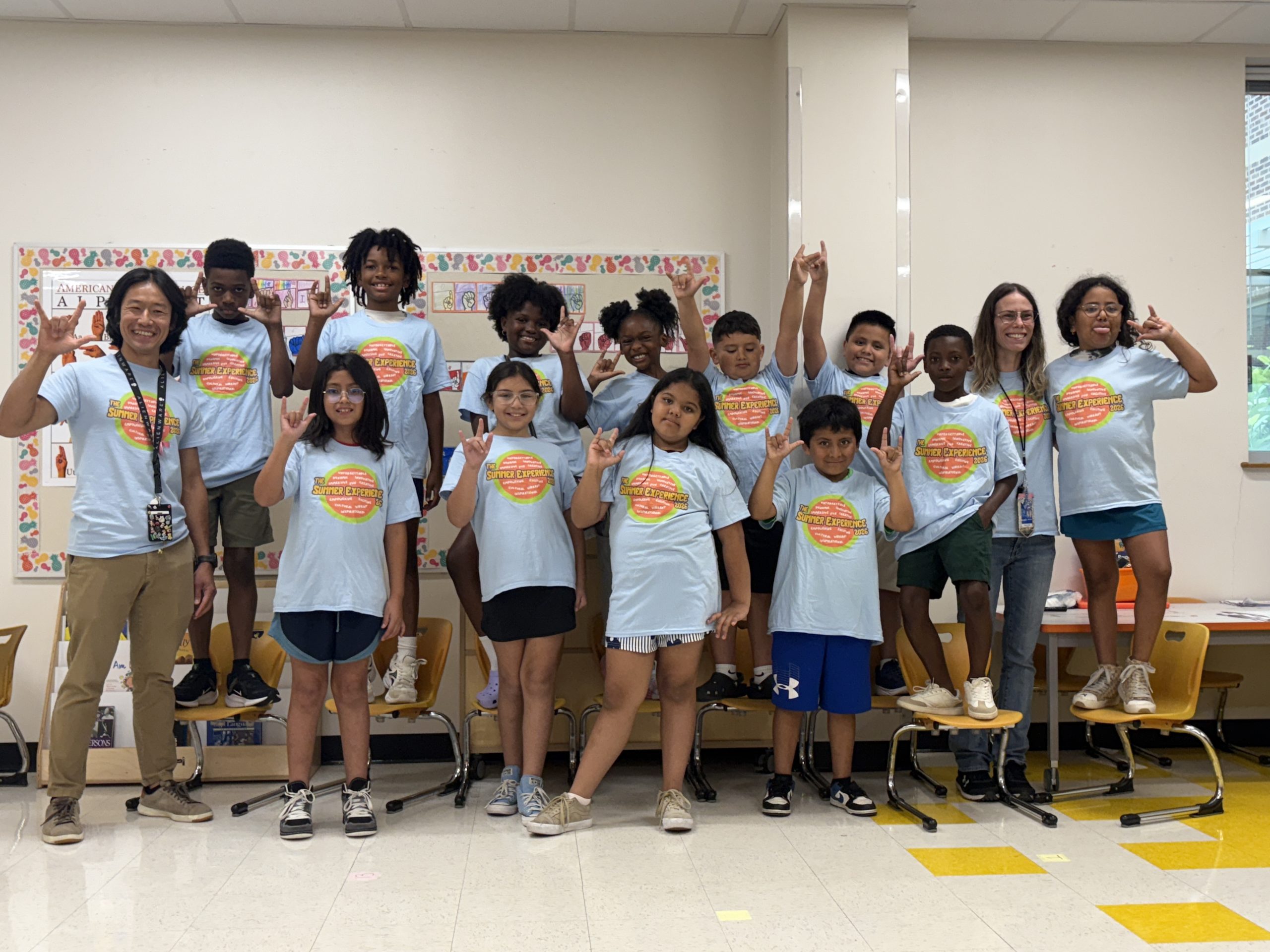
Like Nirali, Maiya L., said she wants to learn ASL so she can help create a more inclusive environment for people around her.
“If two people are having a conversation, and one is hard of hearing, I can interpret for them,” Maiya, a fourth-grader, said.
The month-long camp ended with a showcase, where students presented what they learned in front of their friends and family.
As for the future of the camp, Smith hopes it continues to grow, and even become an extracurricular on campuses during the school year.
“Deaf people don’t view deafness as something to be fixed,” she said. They can’t learn how to hear, but can learn how to sign.”
