
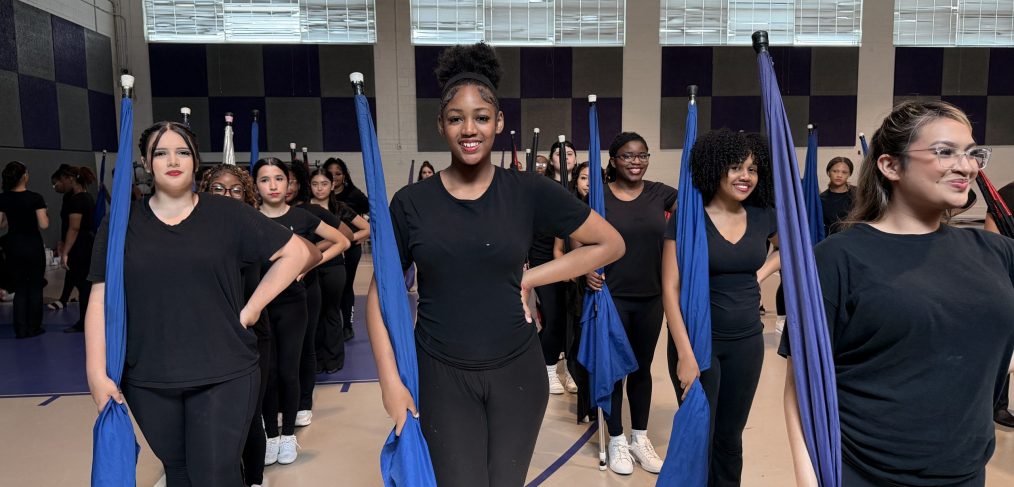
Everyone knows about band camp, but students who support the band during games also have a summer camp that allows them to hone their skills and make their schools shine.
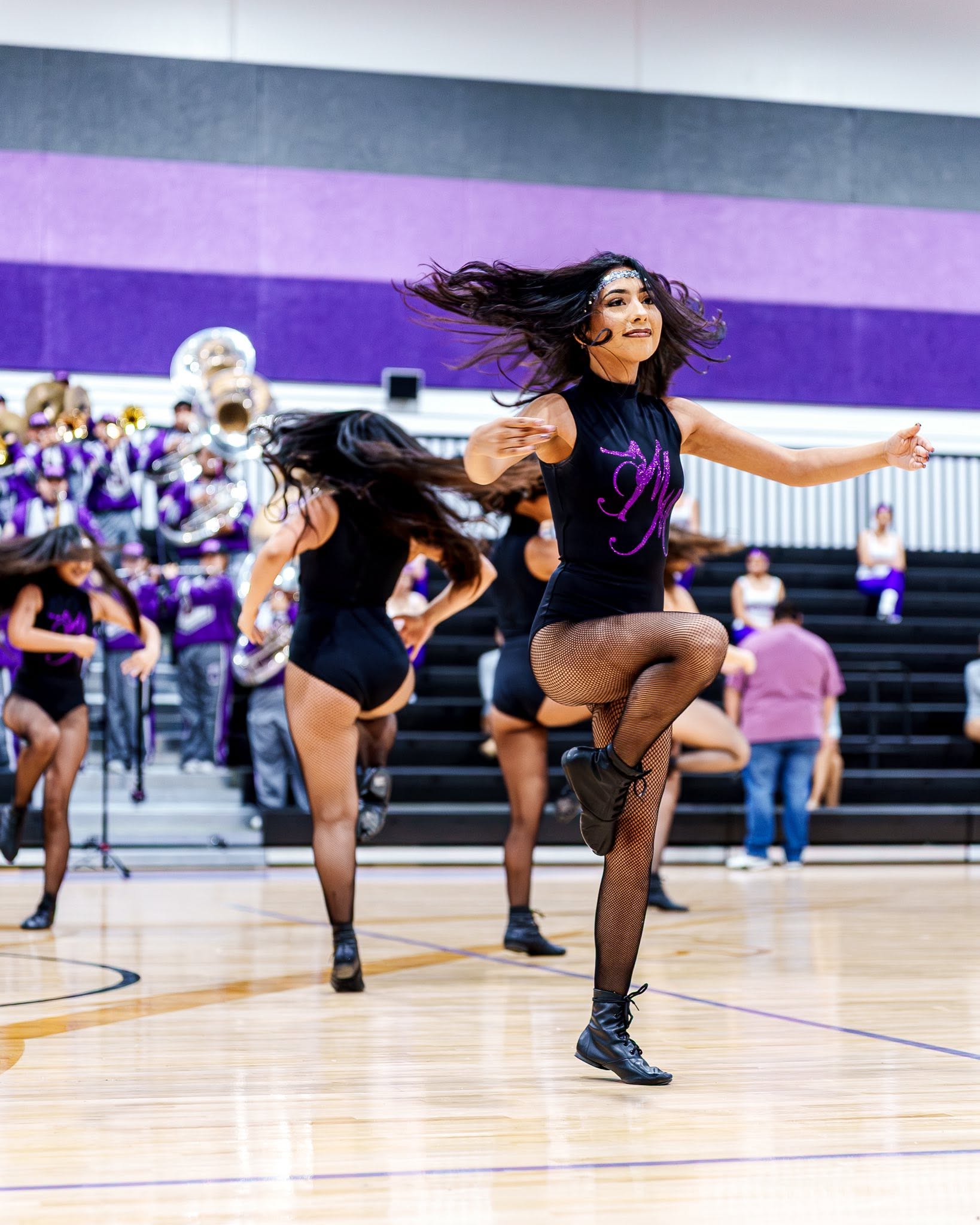
This summer, the Auxiliary Skills Camp at Sunset High School brought together majorettes and color guard performers from across Dallas ISD.
These are the students who keep a marching band moving visually: the ones tossing batons into the air, spinning flags, and pulling the audience’s eyes across the field.
“Sometimes the majorettes and color guard get overlooked because they are a section in the band, but typically, from a band director’s perspective, the focus is on the musicians,” said Kathryn Scott, director of bands at Sunset High School. “This camp gives them the ability to interact with great counselors who teach them to use their batons or their flags.”
Scott helped launch the camp a few years ago after Sunset opened a new music and athletics wing. The first summer drew around 30 students. This year, there are 68 participants representing roughly nine campuses.
A typical day has students working on performance skills, dance, and movement, then they split into smaller groups. Some focus on skills, others learn how to turn those skills into routines to music with different tempos and styles. They also spend time on team-building so that by the final showcase, they perform as a unit rather than as a set of strangers in the same outfits.
If Scott is the architect, though, Anniya Willard is proof of concept. Willard graduated from Wilmer-Hutchins High School in 2025 and has returned as an instructor after a season as a Platinum Girl at Texas Southern University.
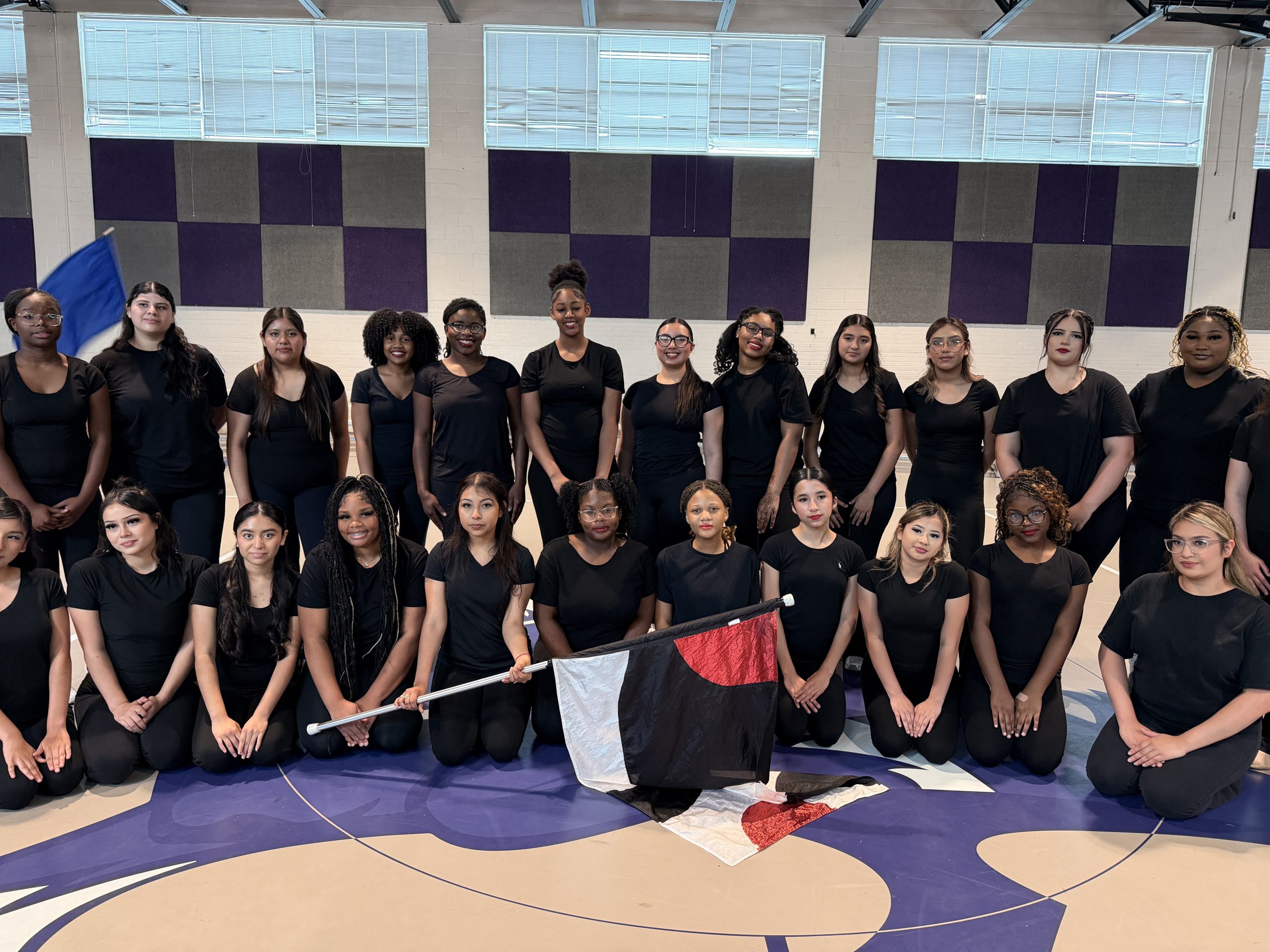 “It’s honestly a blessing,” Willard said. “When I was in high school, I went to camps like this, and they really helped me improve my skills. Now, I can come back and help those who want to be in a position like me.”
Willard remembers the pressure younger students put on themselves.
“They feel like they have to be perfect as soon as they learn something new,” Willard said. “I try to let them know that dropping your baton is okay. Not getting it on the first time is okay. It’s actually a good thing. It means you’re trying.”
Scott said that students who arrived stiff and quiet were tossing higher, smiling more, and cheering for friends from other schools. Scott, who has taught for 15 years still lights up when she talks about what happens when former students like Willard return.
“I imagine future summers with more counselors, specialized groups, and alumni who step in front of the class already knowing how it feels to stand in the back row of a football field,” she said.
For Scott, the real legacy of Auxiliary Camp will not be this year’s showcase or even next year’s enrollment numbers. It will be the steady line of students who move from nervous beginners to confident leaders, then come back wearing instructor badges.
The hope is that campuses that do not yet have majorette or color guard programs will see this model and build their own.
