
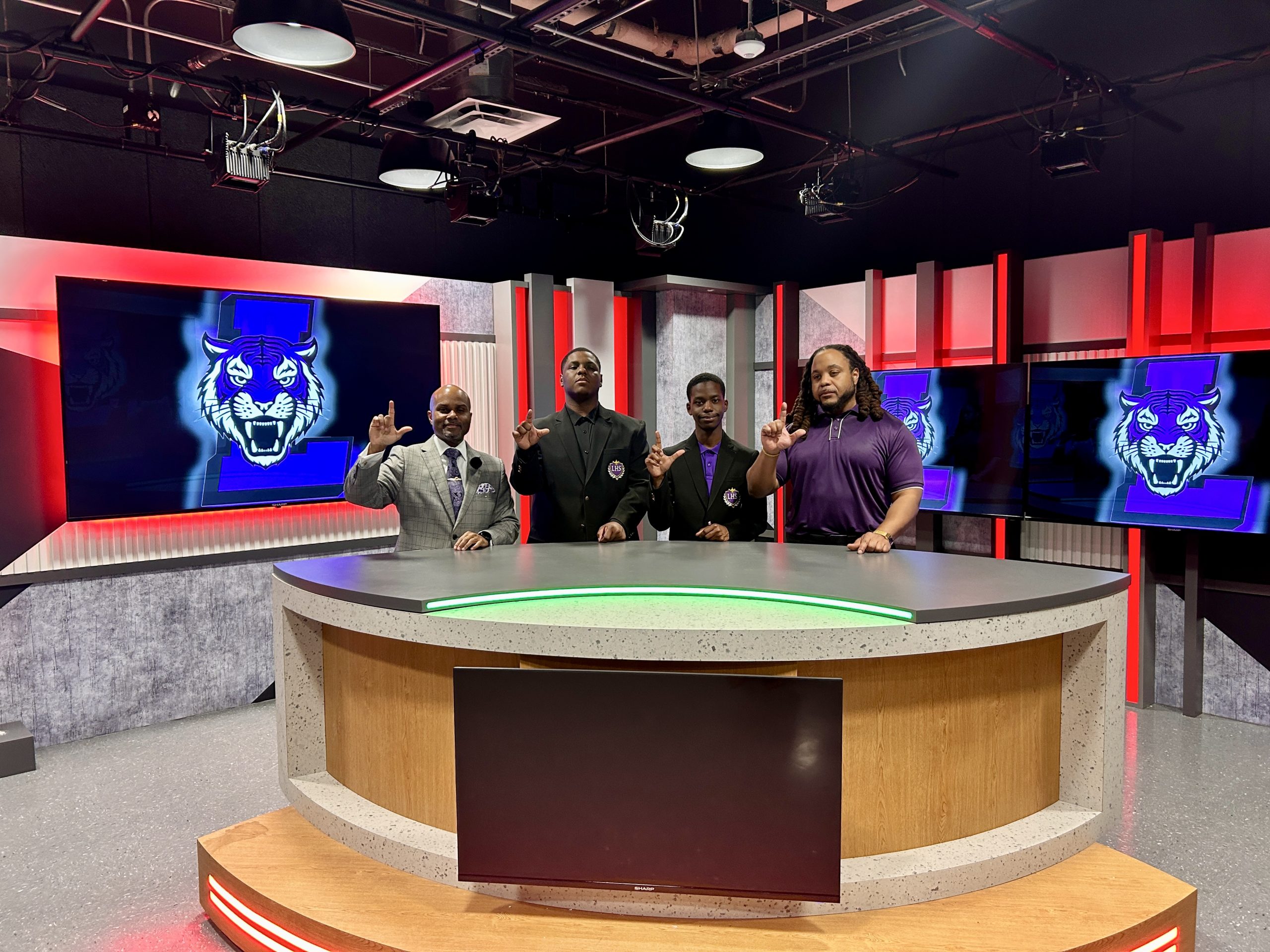
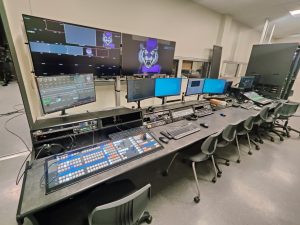
When you step into Lincoln High School and Humanities/Communications Magnet’s news studio, it doesn’t look like a typical classroom, but a professional broadcast station.
Cameras are set. The studio is illuminated by bright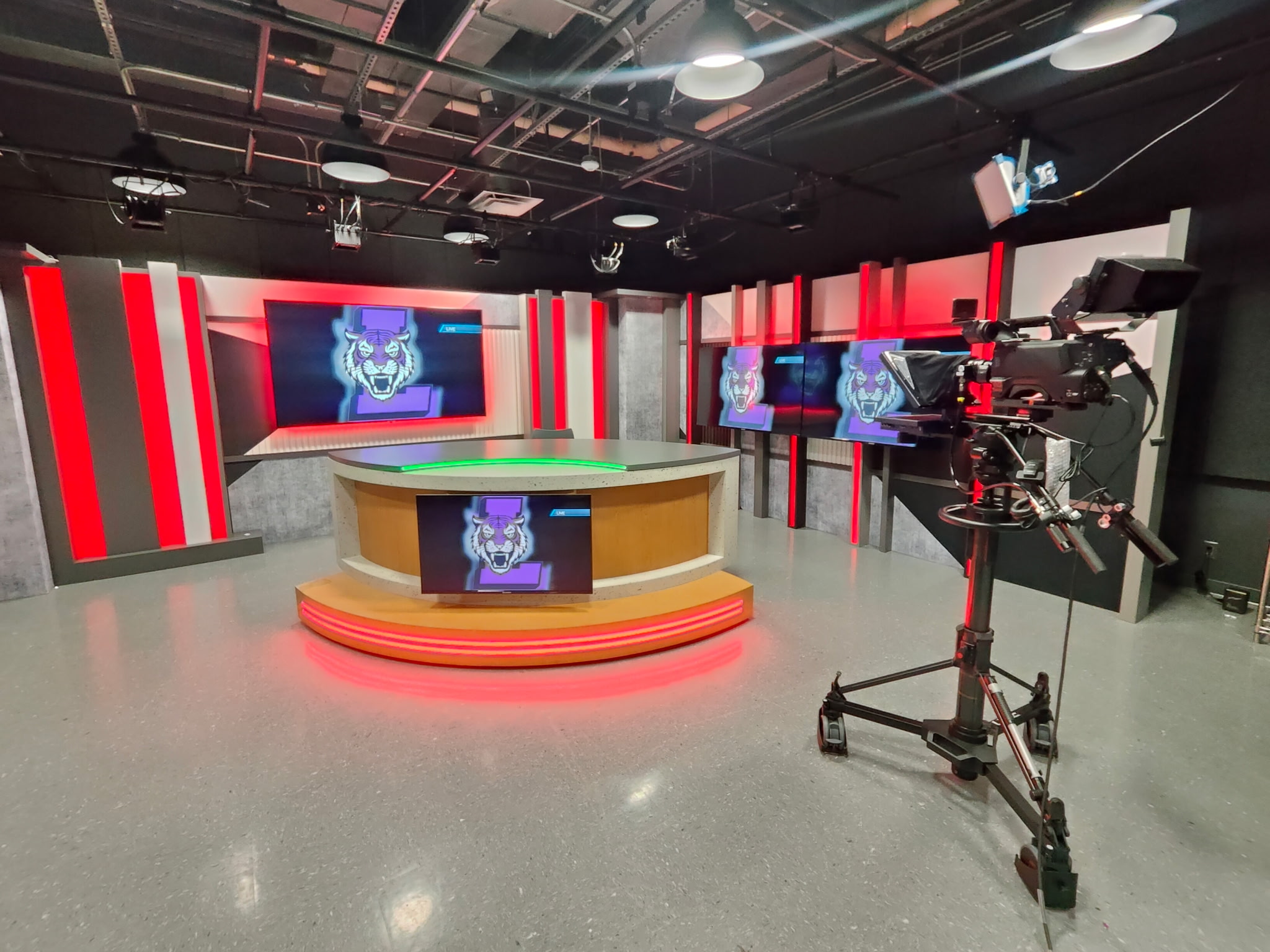 lights and the signature Lincoln logo.
For Derrick Knighten, audio/video production and theatre arts director, the newly renovated space is a full circle moment. A proud 1998 Lincoln graduate, Knighten once sat in the same program when it was known as Radio/TV. Now called Digital Media Arts, the program has transformedalongside the industry itself.
“At one time we were cutting everything on quarter-inch tape, and then I was able to witness the bridge from analog to digital,” Knighten said.
Principal Lance Williams sees the program as part of a much larger legacy.
“This program is one of the signature legacies of the Legendary Lincoln High School. For generations, this powerhouse program has shaped storytellers and trained future professionals who’ve gone on to make an impact in media and beyond,” Williams said. “Today, that legacy is stronger than ever.”
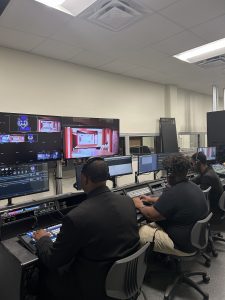
The reimagined program features a news broadcasting studio, a professional sound recording studio, and a non-linear editing lab that mirrors real-world production environments.
For students like senior Antoine E., the transformation is exciting to witness.
“My favorite part is seeing how much has changed over the past four years,” Antoine said. “It’s fun learning how to use all the new equipment.”
Although Antoine plans to major in sports medicine at Texas College this fall, he says mastering professional camera and production skills is a valuable asset he’ll carry into any field.
For Jarrett P., the program opened the door to a new career pathway in communications.
“Before, I casually dismissed the news,” he said. “Now I see the importance of why we need it–to keep everyone informed, involved, and aware of what’s going on in the world.”
Following graduation this spring, Jarrett plans to join the armed forces, where he intends to pursue a degree in communications.
Beyond technical training, Knighten emphasizes media literacy in the classroom by teaching students to critically analyze the content they consume and understand its broader impact.
“Media literacy–whether in news or film–teaches you to truly understand what you see, how it relates to government, how it affects you here as a Dallasite, a South Dallas native, as an African American, Latino—how does it affect you personally?” Knighten said.
Students don’t just sit behind cameras. They write scripts, edit film, build confident on-camera presence, produce podcasts, record music, and manage lighting and sound for theatre performances. Graduates leave with Adobe Premiere certification and hands-on experience that reflects professional industry standards.
The long-term goal is to one day operate as a live, closed-circuit television station broadcasting directly from Lincoln’s studio. For now, students are already gaining the skills and experience to tell meaningful stories and continue Lincoln’s legacy.
