

“I would love to come back and see more boys in Dallas ISD that look like me playing tennis,” said Malcolm M., senior at Barack Obama Male Leadership Academy at A. Maceo Smith.

At the ripe age of 5 years old, Malcolm was introduced to the game of tennis by his grandfather while visiting Longview, Texas. Little did he know that 5-year-old boy would become a history maker in Dallas ISD.
“My grandfather gives himself plenty of kudos for introducing me to the game,” Malcolm said. “He really is so proud of me, and I thank him for exposing me to tennis.”
For Malcolm’s grandfather, the sport represents more than competition. It represents progress.
As a young boy, he was not allowed to formally learn the game because of his race. Instead, he watched other children play through a fence, studying their movements and teaching himself what he could. Years later, he passed that knowledge on to his grandson.
Today, Malcolm’s journey reflects the 2026 Black History Month theme: “A Century of Black History Commemorations.” His success illustrates both how far the community has come and the work that remains.

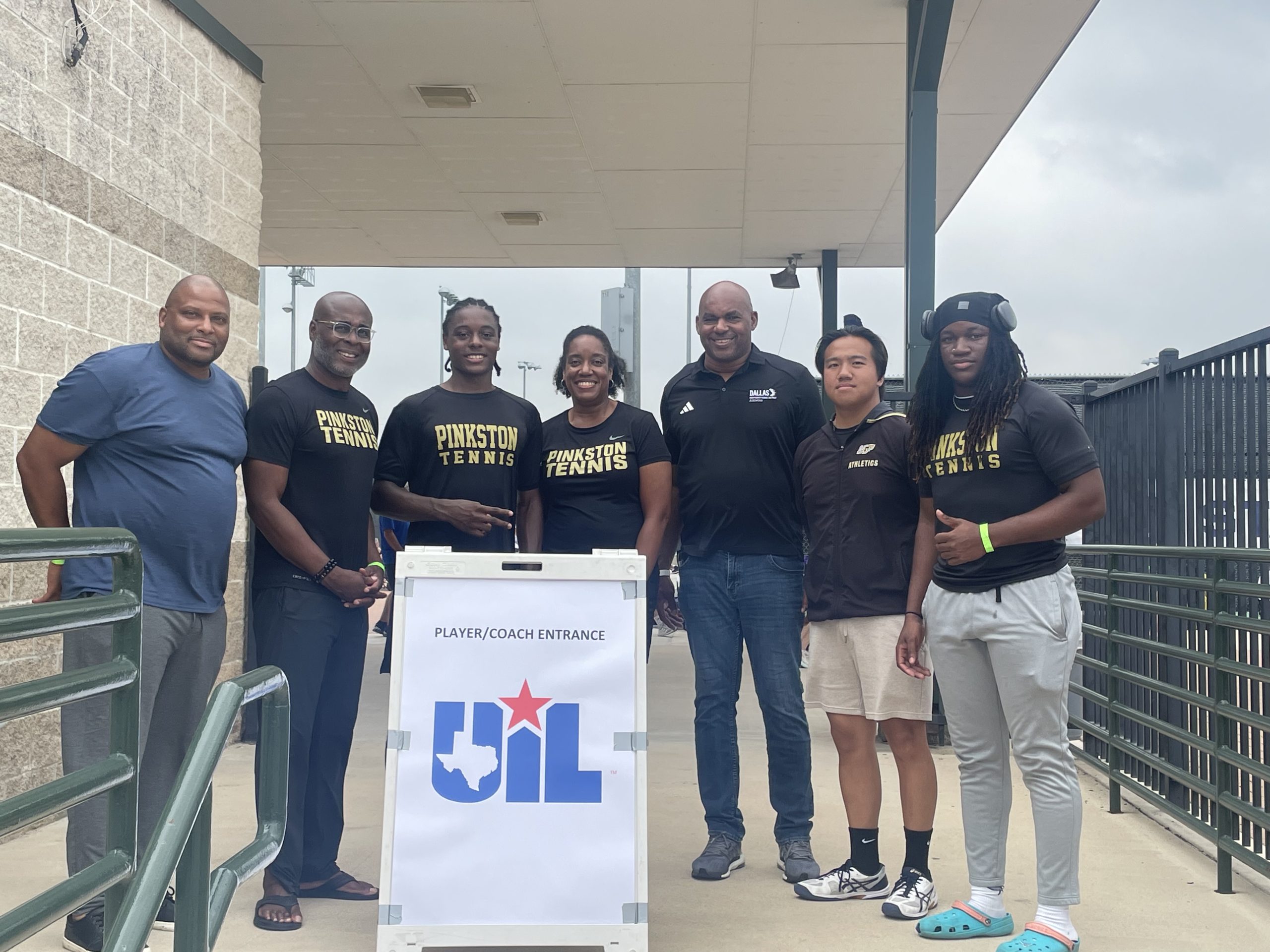
Malcolm also competes for Dr. L.G. Pinkston Sr. High School. As a sophomore, he qualified for the state tennis tournament, becoming the first tennis player in Pinkston and BOMLA history to reach that stage.
“Heading into the state tournament my first year, I had to maintain focus, so it felt like a regular tennis match at first. But once it was over everything hit me, and it was such a huge honor to make history,” Malcolm said.
He finished second at state as a sophomore and third as a junior, falling just one match shy of a state championship.
Malcolm credits much of his drive to his father and grandfather, both former collegiate athletes. From a young age, his father exposed him to a wide range of experiences, from academics to travel, broadening his perspective.
 That exposure helped shape his college decision. Malcolm knew he wanted something different from his parents, who both attended predominantly white institutions.
“During my college search, I knew I really wanted to go to an HBCU,” Malcolm said.
At a Southern Methodist University showcase, he met Ebonye Jones, a coach at Coppin State University, who affirmed that choice.
Jones, a Black woman from the Caribbean, stood out to Malcolm because she took interest in his character, goals, and life beyond tennis.
“She’s seen things in me that she hasn’t seen in other kids, and I think that is what drew her towards me as a person and not just Malcolm the tennis player,” he said.
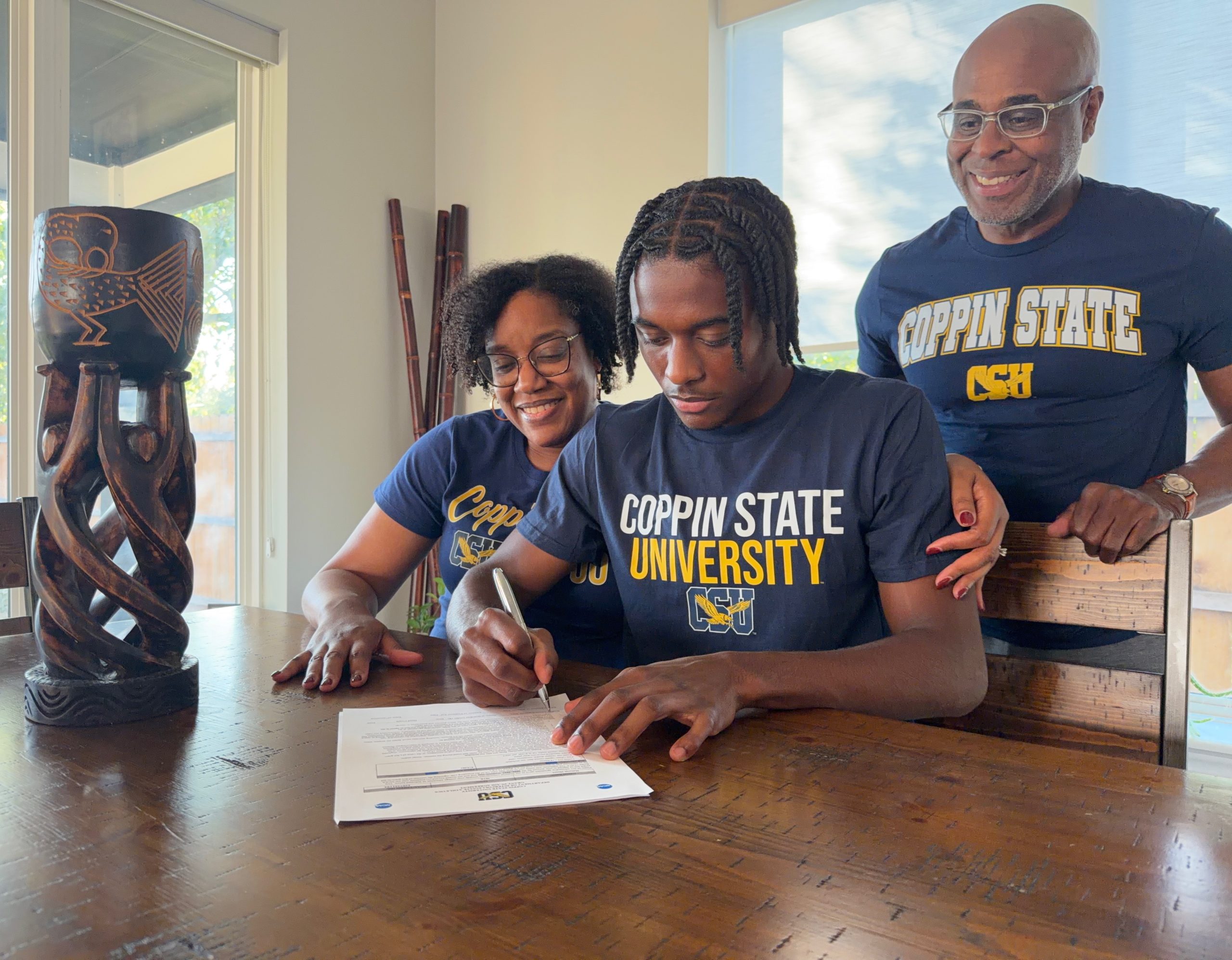
Malcolm accepted a full-ride scholarship to play tennis at Coppin State University and is also a recipient of the HBCU Project Scholarship.
His accomplishments extend well beyond the court.
He is a member of the jazz ensemble band, National Honor Society, and has studied abroad twice in Germany. He also traveled to north Ghana for humanitarian work through Water for West Africa.
During that trip, he was inspired by students at a local school who did not have access to tennis.
“A lot of kids at the school in Ghana didn’t have the opportunity to play tennis, so me being Black and a pretty good tennis player thought it would be cool to share my experience and some tennis equipment with them,” he said.
His contributions led to the creation of a tennis court in Ghana, named in his honor, and the development of his own branch of his father’s nonprofit that incorporates tennis as a tool for opportunity and exposure.

Looking ahead, Malcolm plans to pursue a career in medicine, with a focus on internal medicine or anesthesiology.
What began as just something fun to do with a man who was not even allowed to learn the game with others has ended in a history-making legacy for Malcolm in Dallas ISD.
“If I would sum up my legacy, consistency brings results,” he said.
